Social engineering attacks are becoming more convincing and often use information gathered from social media, public websites and even AI-generated content. These scams can arrive through email (phishing), text messages (smishing), phone calls or voicemails (vishing), and QR codes (quishing). Regardless of the channel, attackers may pose as trusted contacts to obtain information, payments or account access.
Common Warning Signs
- Unexpected requests for passwords, account information, payment details or other sensitive information
- Messages, emails, texts or phone calls that create a sense of urgency, fear, or pressure to act quickly
- Unfamiliar links, attachments, QR codes or requests to download software
- Requests to bypass normal processes, security controls or approval procedures
- Emails, text messages, phone calls, voicemails or QR codes that seem unusual, even when they appear to come from a trusted source
Before You Act
When you receive an unexpected or suspicious communication:
- Pause
- Verify the request using a trusted channel
- Check links before clicking
- Confirm payment requests independently
- Verify the identity of callers before sharing information or taking action
- Report suspicious activity
Why Verification Matters
A message may look legitimate, but appearances can be deceiving. Cybercriminals count on rushed decisions and distractions. Taking a few extra seconds to verify a request can prevent significant security incidents.
Remember: Pause. Verify. Report.
If something feels suspicious, trust your instincts and report it.
Thank you for helping keep Republic Services cyber safe.
Badge 🛡️ Human Firewall
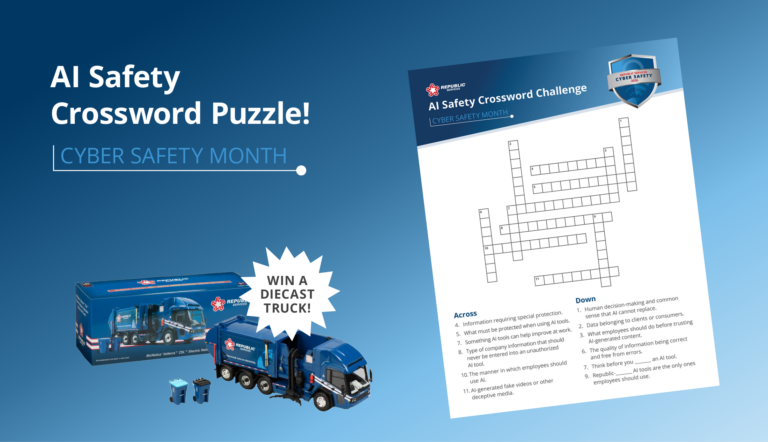
Cyber Safety Month Trivia Challenge
Complete activities, tackle challenges, and sharpen your cyber skills for a chance to win a Republic Services Diecast Electric Truck. Contest ends October 30.