
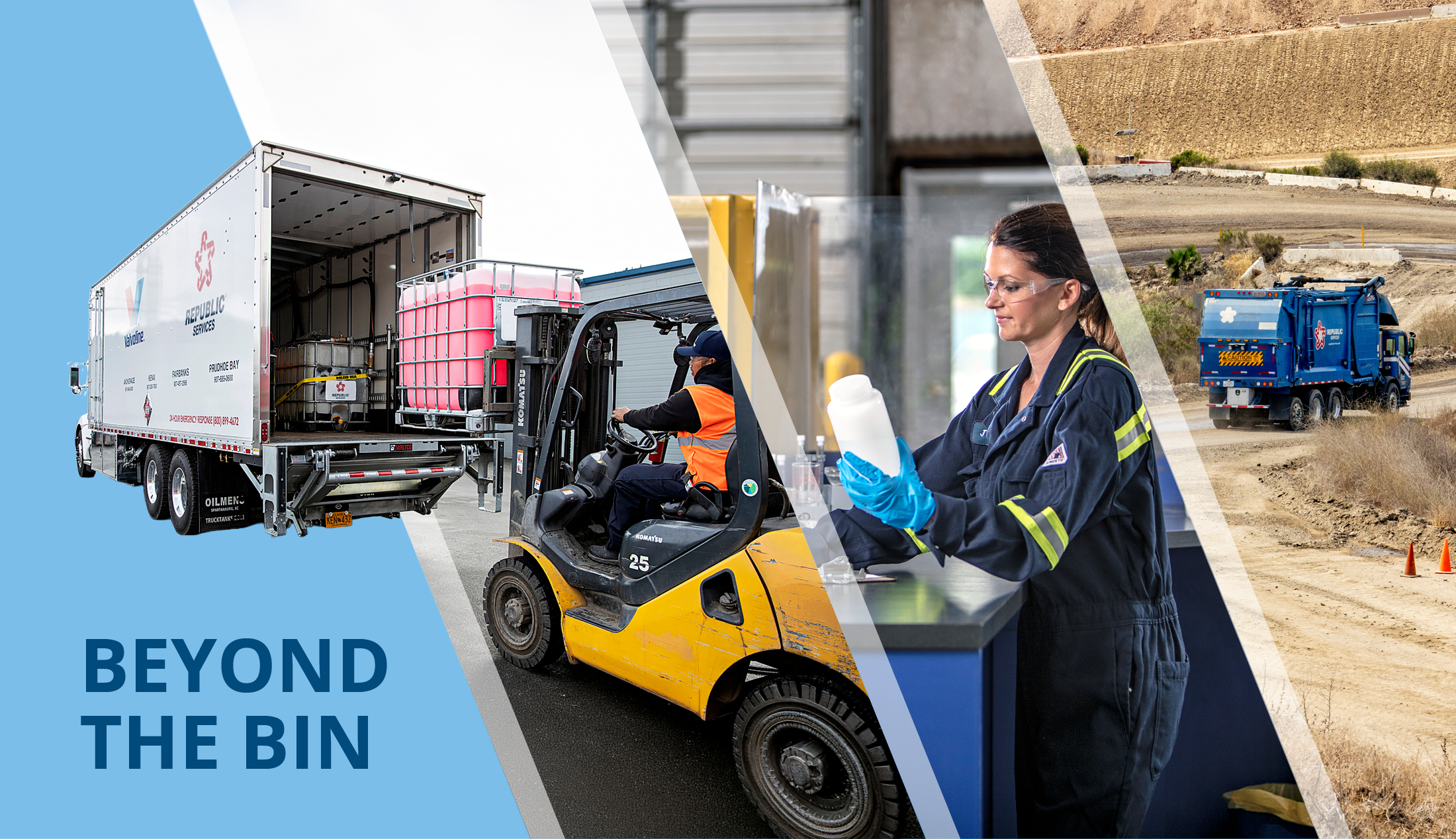
When people see a landfill, they usually notice the trucks, compactors and heavy equipment moving waste across the site. What they don’t see requires just as much attention: leachate, for example.
What is leachate?
Leachate forms when liquid moves through the landfill. It is collected by an engineered network of pipes, drainage layers and sumps installed at the bottom of the landfill. If not properly contained and managed, in some cases leachate may pose a risk to the environment. That’s why leachate management is so important to landfill operations.
Managing leachate responsibly
Our operations and environmental compliance teams help ensure leachate is collected, stored, treated and transported the right way. Each landfill is different, but the goal is the same: keep liquids contained and collection systems operating as intended.
Here’s how leachate collection systems work:
- Engineered liners help collect and contain the leachate within the landfill.
- Underground pipes and sumps move the liquid to treatment facilities, storage tanks, containers or ponds.
- Routine inspections and data analysis help teams monitor conditions and stay in compliance.
After the leachate leaves the landfill
Most of our landfills send leachate to permitted wastewater treatment facilities or other approved disposal locations. Some sites treat their leachate on site prior to disposal or discharge.
It’s not the most visible part of our work, but leachate management is a great example of what happens beyond the bin – the planning, technology and teamwork that help us operate in an environmentally responsible manner long after waste is collected.
Beyond the Bin: A New Blue Nation Series
Beyond the Bin will take employees behind the scenes of our lesser-known operations, sharing informative stories about the work, people and processes that help drive our Environmental Compliance, Health and Safety (EHS) culture.
Have a story idea? Contact mquillard@republicservices.com.