
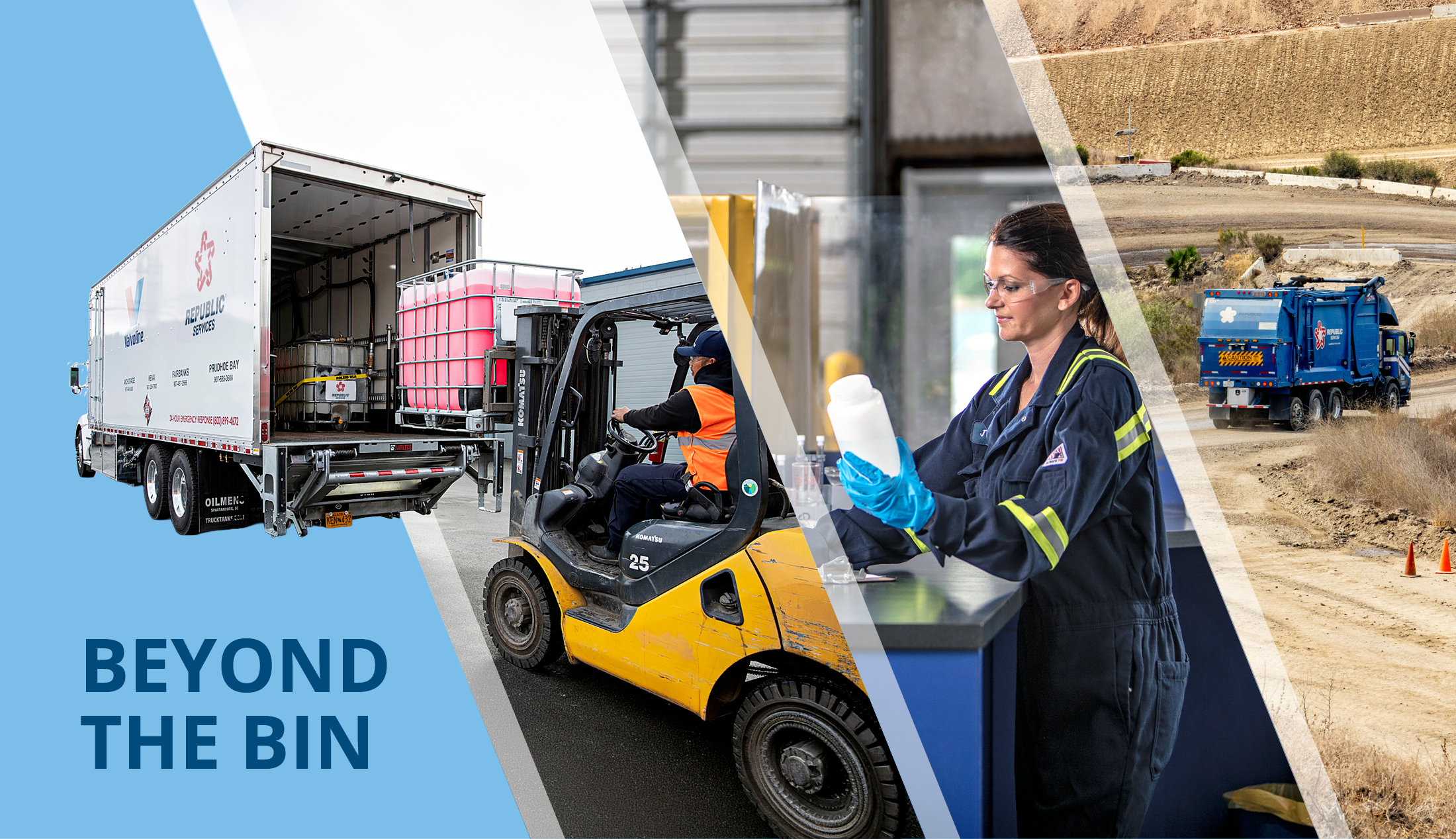
Storms bring rain and snow, but what happens to all that water once it hits our facilities? We’re going Beyond the Bin to see how our teams manage stormwater in a safe and environmentally responsible manner.
Why Stormwater Management Matters
Stormwater runoff can pick up sediment, trash, oil, chemicals and other materials as it moves across hauling yards, parking areas, landfill working faces and slopes, tipping floors and other operational spaces. Every Republic Services facility has a site-specific Stormwater Pollution Prevention Plan (SWPPP) with best management practices (BMPs) to help protect our employees and communities while remaining in compliance with Clean Water Act and other water-related regulations.
Stormwater Management Tools
All Republic Services facilities use BMPs to manage stormwater safely and compliantly. Here are a few examples:
- Covered areas that reduce exposure to rain and snow
- Good housekeeping, such as cleaning spills, picking litter and sweeping outdoor work areas
- Secondary containment, including retention ponds and storage containers
- Engineered slopes, drainage ditches, or piping systems that direct water to designated drainage areas
- Covered areas that reduce exposure to rain and snow
Tips to Protect Your Home
Stormwater risks can start in your own backyard. Here are a few simple ways to help protect your home:
- Keep gutters and drains clear of leaves, waste and debris.
- Store chemicals – such as paint, fuel and fertilizers – indoors or in covered areas.
- Be prepared for flooding by keeping sandbags on hand.
Whether at a Republic Services facility or at home, managing stormwater safely and responsibly helps keep pollutants out of our waterways and protects the communities we serve.