
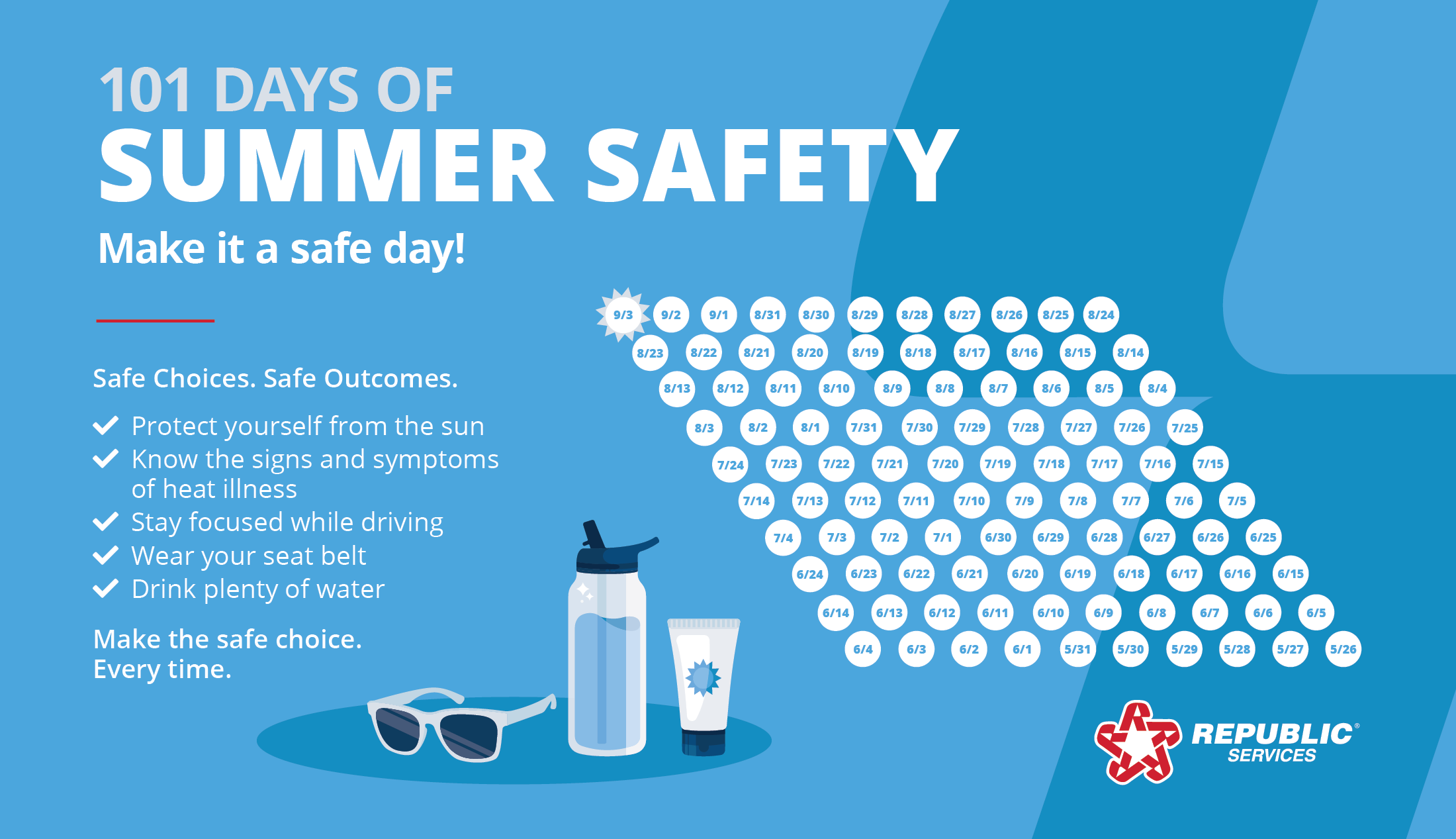
Summer is here, bringing with it unique safety risks that all of us need to be aware of at work, at home and on vacation. One of the most serious risks is heat stress, which can quickly lead to confusion, disorientation, loss of consciousness or even seizures and heat stroke. Here’s what you need to know to keep you, your coworkers and your families safe.
Know the early signs of heat stress. Your body will warn you with these symptoms:
- Excessive sweating (or the absence of sweat)
- Unusual fatigue
- Headache or dizziness
- Muscle cramps
- Nausea or loss of appetite
Hydrate before you are thirsty. Thirst is one of the first symptoms of dehydration, and your goal should be to prevent it. Drink water regularly and increase your intake if you’re in a warmer environment. Remember – sodas and sugar-filled drinks do not replace water as a hydration source.
Avoid excessive heat exposure. If you’re out in the field, take plenty of breaks. If you’re traveling in a warmer climate, give yourself time to acclimate. If you’re doing yard work or working in the garage, go inside regularly to cool off. Keeping your body temperature regulated will help prevent heat stress.
Speak up. The strength of our EHS culture is exemplified in how we take care of each other. If you see someone showing signs of heat stress – or even not following these guidelines – speak up. Symptoms escalate quickly, and many people affected by heat stress aren’t aware until it’s too late. Your voice could help prevent a heat-related accident or injury.